
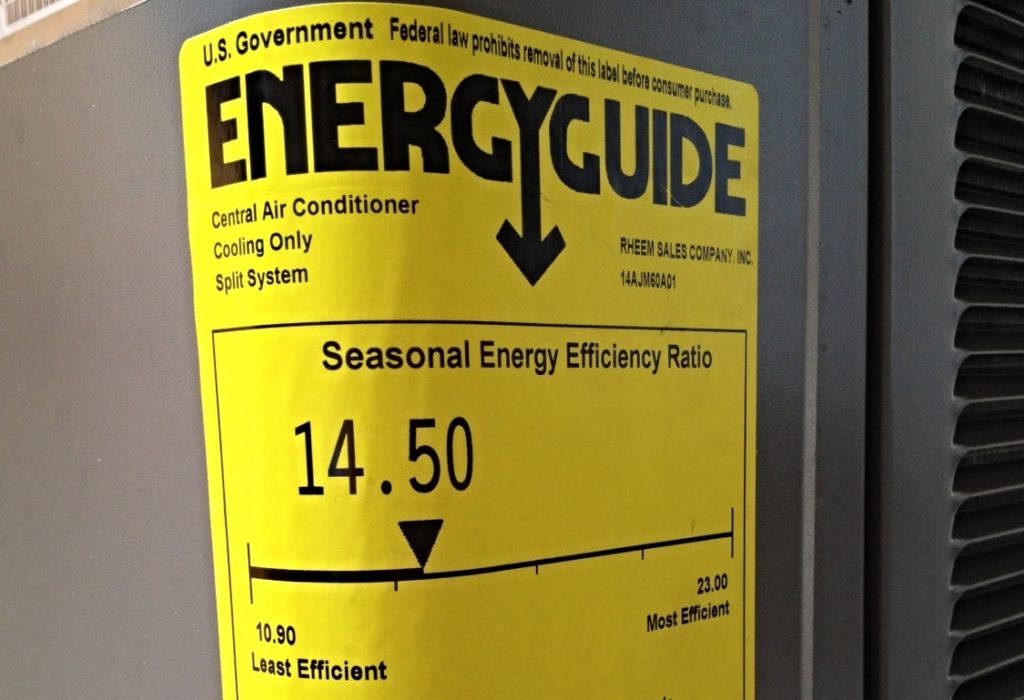
With Winter Almost Over, It’s a Good Time to Think About Spring AC Replacement
Here in Colorado, a mild winter means a couple of good things: fewer furnace stress calls and a little breathing room before comfort season hits. And as winter winds down, I always start hearing the same question: “Should I be thinking about replacing my air conditioner before summer?”
If your AC is getting older, now is a good time to look at options while the weather’s calm, the schedules are more open, and you’re not sweating through a heat wave trying to make a decision.
Let’s break down the math on two common AC replacement scenarios — comparing a base-model 14 SEER single-stage unit to a higher-efficiency 18 SEER modulating unit — and what each means for your utility bill over time.
What SEER Means
First, a quick refresher:
SEER stands for Seasonal Energy Efficiency Ratio. The higher the number, the more cooling you get per unit of electricity.
- 14 SEER is a common standard today — solid efficiency, straightforward operation
- 18 SEER is a high-efficiency, variable-speed/modulating system — higher upfront cost, but lower operating cost over time
We’re comparing these not to sell one or the other, but to put real numbers beside the choice so you can understand the trade-offs.
The Math — Cost to Run
Let’s use a typical home setup:
- 3-ton AC (36,000 BTU/h)
- Cooling season in Denver: about 1,200 hours of run time over the year (reasonable estimate based on HDD/CDD patterns)
- Electricity cost: $0.14/kWh (you can swap your own rate in the math below)
Cooling Output — The Useful Part
Since both units deliver the same cooling capacity (3 tons), the difference is how much electricity they use to do it.
- 14 SEER unit → 3 tons ≈ 36,000 BTU/h ÷ 14 ≈ 2,571 watts of electricity used per hour
- 18 SEER unit → 36,000 BTU/h ÷ 18 ≈ 2,000 watts per hour
That means the higher SEER unit uses about 22% less electricity to do the same cooling.
Seasonal Energy Use
Multiply watts by hours and convert to kilowatt-hours:
| Unit | kW per hour | Annual Hours | Annual kWh |
|---|---|---|---|
| 14 SEER | 2.57 kW | 1,200 hrs | 3,084 kWh |
| 18 SEER | 2.00 kW | 1,200 hrs | 2,400 kWh |
Annual Cost
| Unit | Annual kWh | $/kWh | Estimated Cost |
|---|---|---|---|
| 14 SEER | 3,084 | $0.14 | ~$432 |
| 18 SEER | 2,400 | $0.14 | ~$336 |
Annual savings with 18 SEER: ~$96 per year
Upfront Cost Difference
Typical installed cost (ballpark, varies by brand and labor):
- 14 SEER single-stage AC (3 ton): ~$5000–$6,000
- 18 SEER modulating AC (3 ton): ~$8,000–$9,000
- Difference: $3,000
Estimated Payoff Time
Take the $96 annual savings and divide the cost difference:
$4,000 ÷ $96 ≈ 31 years
That’s a long time if you’re only thinking about energy savings.
Before you decide that makes high-efficiency pointless, here’s what that simple math misses:
Things the Simple Math Doesn’t Capture
1. Cooling Load Isn’t Constant
Homes rarely run at full capacity every hour. High SEER units modulate, run longer cycles at lower speed, and use less power when the load is light — which usually improves real-world efficiency beyond the nameplate SEER number.
2. Humidity Control and Comfort
An 18 SEER modulating system doesn’t just cool — it more precisely controls indoor humidity and temperature. That’s not dollars on a bill, but it is real comfort.
3. Longer Equipment Life
Variable-speed systems tend to have longer useful life because they don’t crank on/off as hard as single-stage units.
4. Local Utility Rebates
Colorado utilities often have rebates for higher-efficiency equipment that can offset part of the upfront cost. That changes the payoff math.
5. Future Electricity Prices
If electricity costs rise over time, the savings gap between efficient and less efficient only gets bigger.
What This Means for Your Decision
If you’re purely looking at energy savings to justify the higher cost, the simple payback for an 18 SEER unit based on reduced kWh use alone is long — decades in many cases.
But if you factor in:
- Better dehumidification
- Quieter and more consistent comfort
- Less wear and tear on equipment
- Possible rebates or incentives
- Increased home value
Then the story shifts from “payback time” to “value over ownership time.”
So Is Now a Good Time to Replace?
This winter weather has given most of us a chance to think ahead instead of reacting. If your AC is approaching 10–12 years, or you’ve noticed performance slipping, now is a good time to start considering options — not because you must, but because you’ll have time to plan without heat stress.
Whether you choose a 14 SEER single stage or an 18 SEER modulating unit depends on:
- Your budget
- How long you plan to stay in the home
- Your comfort priorities
- Local incentives or rebates
The math is only part of the story — but understanding it helps you make a grounded, no-nonsense decision.
Premier Mechanical – www.claimyourcomfort.com – 720.207.6812