How Dirty Coils and Filters Affect AC Energy Use — And What That Means Over 15 Years
Homeowners often hear two extreme claims:
- “A dirty AC doubles your electric bill.”
- “Maintenance barely matters.”
Neither is accurate.
The truth sits in the middle — and it’s measurable.
This article breaks down what actually happens inside a residential air conditioner when coils and filters get dirty, how that affects energy use, and what the long-term financial impact realistically looks like.
Step 1: What Physically Changes When Things Get Dirty?
An air conditioner relies on two things to work efficiently:
- Unrestricted airflow
- Clean heat transfer surfaces
When either of those is compromised, the system must run longer to move the same amount of heat.
Dirty Air Filter
A clogged filter increases static pressure in the duct system. That:
- Reduces airflow across the evaporator coil
- Lowers system capacity
- Increases blower energy use
- Extends runtime to reach thermostat setpoint
Lower airflow does not necessarily spike watt draw dramatically — but longer runtime increases total energy use.
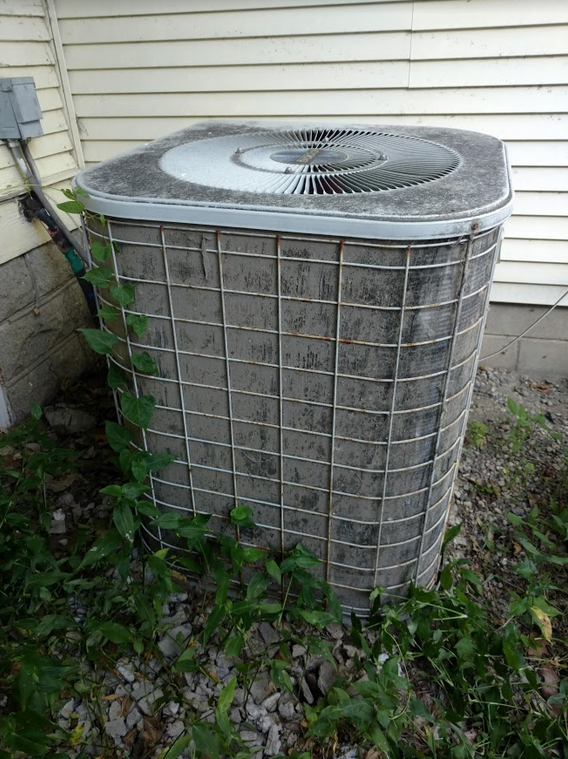
Dirty Condenser Coil
The outdoor coil’s job is to reject heat.
When coated in dust, grass, or debris:
- Heat transfer efficiency drops
- Head pressure rises
- Compressor workload increases
- Capacity decreases
Higher head pressure typically increases compressor amperage modestly. Again, the larger energy penalty usually comes from longer runtime, not from an immediate dramatic wattage spike.
Step 2: What Is a Reasonable Energy Penalty?
In residential systems under normal fouling (not extreme neglect), a reasonable range for seasonal efficiency degradation is typically:
5%–15%
That range reflects:
- Moderate airflow restriction
- Reduced coil heat transfer
- Increased compressor lift
Severe neglect can exceed this — but that’s not the norm for most occupied homes.
So instead of dramatic claims, we’ll model the conservative and realistic range.
Step 3: Seasonal Energy Math (Realistic Scenario)
Let’s assume a typical 3-ton residential system uses:
3,000 kWh per cooling season
(This varies widely by climate and runtime, but this is a reasonable example.)
If efficiency drops 5%
Energy use becomes:
3,150 kWh
Extra energy:
150 kWh
At $0.15 per kWh:
$22.50 extra per year
If efficiency drops 10%
Energy use becomes:
3,300 kWh
Extra energy:
300 kWh
At $0.15 per kWh:
$45 per year
If efficiency drops 15%
Energy use becomes:
3,450 kWh
Extra energy:
450 kWh
At $0.15 per kWh:
$67.50 per year
These are not dramatic numbers. They’re realistic.
Step 4: What Does That Mean Over 15 Years?
Now let’s extend it over a typical system lifespan.
| Efficiency Loss | Extra Annual Cost | 15-Year Cost |
|---|---|---|
| 5% | ~$22 | ~$330 |
| 10% | ~$45 | ~$675 |
| 15% | ~$67 | ~$1,012 |
So over 15 years, poor maintenance could reasonably cost:
$300 to $1,000 in additional electricity
Not enough to “buy a new AC.”
But enough to matter.
Step 5: The Bigger (Often Ignored) Cost
Energy waste is only part of the equation.
Longer runtime and higher head pressure increase:
- Compressor operating temperature
- Motor wear
- Electrical stress
- Contactor wear
Those effects don’t guarantee early failure — but they increase risk.
If better maintenance extends system life even one year, the avoided replacement cost can easily exceed the cumulative energy savings alone.
That’s where the real financial leverage exists — not just in kilowatt-hours.
Step 6: What Does Proper Maintenance Actually Cost?
Reasonable annual maintenance expenses:
- Filters: @$10 per year (In Denver a cheaper filter means more airflow and thats best).
- Basic DIY coil cleaning
This is where you save your money for that useful something. Don’t spend it on a professional service. You can do this step yourself. Just wash your condenser down well with your hose in the springtime. Carefully brush out any pollen or debris that wont come out with the water. Here is a tutorial video on this simple process.
Your 15 year cost to do this yourself now sits at just $150 in filters.
The return comes from:
- Avoided inefficiency
- Reduced stress on components
- Preserved capacity
- Lower likelihood of mid-season failure
Step 7: The Balanced Conclusion
Here’s the honest summary:
- Dirty filters and coils do increase energy use.
- The increase is typically modest in maintained homes.
- Over 15 years, that inefficiency can cost up to $1000.
- The bigger financial benefit is reduced strain and better system longevity.
Maintenance will not “pay for your next AC” purely in energy savings.
But it will:
- Protect the investment you already made
- Keep operating costs closer to rated efficiency
- Reduce preventable wear
- Improve reliability
- Increase spending loot for something useful
And when you combine energy savings with longevity protection, maintenance becomes financially rational — not sensational.
Final Thought
Air conditioners don’t usually fail because they’re old.
They fail because they’ve been running inefficiently and under stress for years.
Keeping filters clean and coils clear doesn’t create miracle savings.
It simply allows the system to operate as it was designed to.
And over 15 years, that consistency matters.
Premier Mechanical – www.claimyourcomfort.com – 720.207.6812.