Designed Obsolescence in HVAC: Why Furnaces Don’t Last Like They Used To
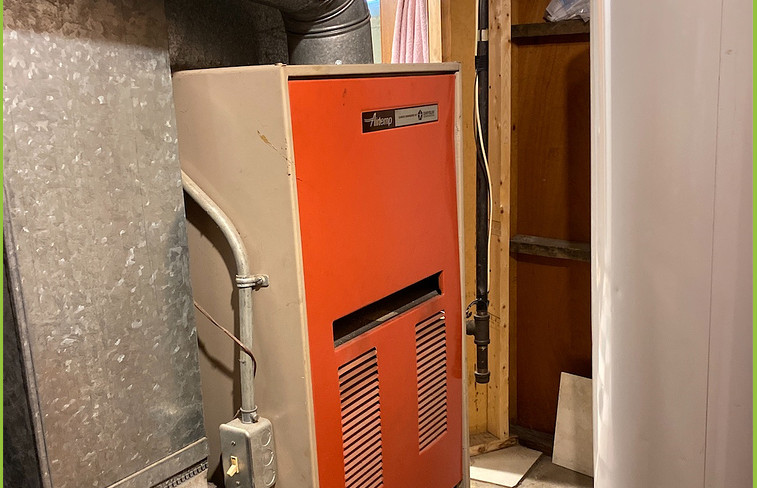
Every once in a while, I’ve been in a basement working on a furnace and see a data plate from the 1970s. Furnaces really did last that long. And the reason they don’t anymore isn’t an accident. But, there may be something we can do about designed obsolescence
What Furnaces Used to Be Like
Back in 1965, a typical residential gas furnace cost around $800 installed. Adjusted for inflation, that’s roughly $8,000–$8,500 in today’s dollars.
That’s important, because when people say, “They don’t make them like they used to,” they’re usually comparing a modern $4,500–$6,000 furnace to something that was effectively a premium product by today’s standards.
Those old furnaces were:
- Heavy steel heat exchangers
- Simple mechanical controls
- No circuit boards
- No plastic parts
- No sensors stacked on sensors
They were inefficient by today’s standards, but they were built to survive abuse. And they often did last 30 years +.
What Changed
Fast forward to today. Modern furnaces are far more efficient, quieter, and better controlled — but they’re also more complex.
Instead of a few moving parts, you now have:
- Circuit boards
- Flame sensors
- Pressure switches
- Inducer motors
- ECM blower motors
- Condensate systems
- Plastic venting and fittings
Each of those components has a service life. And the industry knows exactly what that life expectancy is.
Most modern furnaces are designed around a 12–15 year lifecycle.
Not because they can’t be built to last longer — but because building them that way would cost more, and most consumers won’t pay that upfront.
Designed Obsolescence (Without the Conspiracy)
This isn’t a secret meeting where manufacturers decide to “make them break.” It’s more subtle than that.
Here’s how it really works:
- Thinner metals save cost and improve efficiency, but fatigue faster
- Electronics improve performance, but don’t last decades
- Plastic components resist corrosion, are more affordable, but fail with heat and age
- High efficiency means condensation, which introduces moisture where it never existed before
Every improvement comes with a tradeoff.
And when you stack enough tradeoffs together, you end up with a system that performs well — but only for a known window of time.
Why 15 Years Is the Magic Number
By the time a furnace hits 15 years:
- Heat exchangers are nearing fatigue limits
- Motors and control boards are end-of-life
- Replacement parts get expensive or discontinued
- One major failure can exceed the value of the unit
At that point, replacement isn’t a scam — it’s often just math.
The Hard Truth for Homeowners
People understandably get frustrated when a modern furnace doesn’t last 30 years. But it’s not a fair comparison unless you also compare:
- Efficiency
- Comfort
- Safety features
- And what that old furnace actually cost in today’s dollars
If manufacturers built a furnace today to last 30 years, it would:
- Cost significantly more upfront
- Be heavier and less efficient
- Have fewer comfort features
- Still eventually need expensive repairs
Most homeowners don’t want that tradeoff — even if they say they do.
The Real Takeaway
Modern furnaces aren’t junk — they’re optimized products. They’re built to hit efficiency targets, meet regulations, stay affordable, and last long enough to make sense financially.
However…
These economic and regulatory forces have created a reality where the average homeowner is stuck paying more for their home’s HVAC system over 30 years than in decades past. Im developing a program that may resolve the financial pressure design obsolescence has created. If you are getting ready to replace your hvac system, live in the Denver Metro area, and want more information, please feel free to reach out. If this doesn’t apply to you, then my recommendations are: Take care of your system, keep airflow clean, don’t ignore small issues, and prioritize regular maintenance — that’s how you get the most life out of modern equipment.
But don’t be shocked when today’s furnace doesn’t outlive the house. It was never designed to.
Premier Mechanical – claimyourcomfort.com – 720.207.6812.