What Is a Furnace Pressure Switch (And Why I’ve Been Seeing So Many Fail This Year)
Every winter, there’s usually one furnace issue that seems to pop up over and over. Some years it’s igniters, some years it’s blower motors.
For whatever reason, this year has been a pressure switch year. I normally see a couple of bad ones each winter — this season I’ve had call after call for the same problem.
So let’s talk about what a furnace pressure switch does, what happens when it starts acting up, and a few simple things homeowners can safely check before calling for service.
What a Furnace Pressure Switch Does
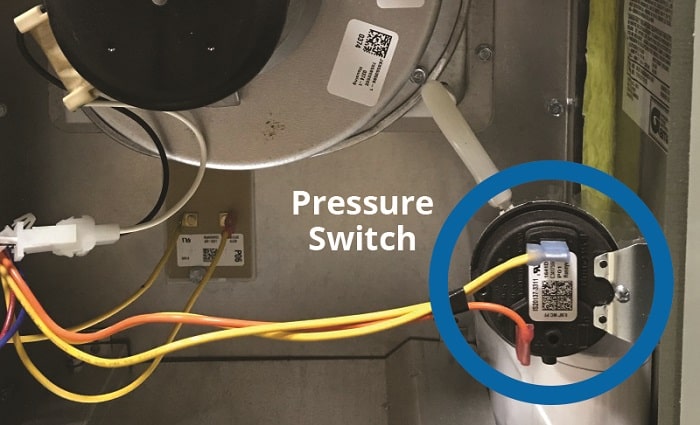
The pressure switch is a safety device. Its job is to make sure your furnace is venting exhaust gases properly before it allows the burners to fire.
Here’s the simple version:
- When your furnace starts, the inducer motor turns on
- That motor pulls exhaust gases out through the vent pipe
- The pressure switch senses that airflow
- If airflow is good, the switch closes and allows ignition
If the furnace can’t vent properly, the pressure switch stays open and the furnace will not run. That’s by design.
Common Symptoms of a Bad or Failing Pressure Switch
When a pressure switch fails, it doesn’t always fail completely. Sometimes it works most of the time — which can be even more frustrating.
Common symptoms include:
- Furnace starts, then shuts down before ignition
- Furnace runs fine one day and won’t start the next
- Short cycling
- Blower runs but no heat
- Furnace works during the day but not at night
- Error codes pointing to a pressure switch or venting issue
Intermittent problems are especially common — and that’s what I’ve been seeing a lot of this year.
Why Pressure Switches Fail
Pressure switches themselves are fairly simple, but they’re sensitive.
Common causes include:
- Moisture in the switch or tubing
- Cracked or brittle rubber tubing
- Blocked or partially blocked vent pipes
- Ice or snow buildup outside
- Condensate drain issues
- Weak inducer motors
Cold, wet weather makes all of these more likely — which probably explains why I’ve been seeing so many this season.
Things Homeowners Can Safely Check
Before calling for service, there are a few safe, simple checks you can do:
- Check the vent outside
Make sure the exhaust and intake pipes aren’t blocked by snow, ice, leaves, or debris. - Look at the rubber tubing
If you can access it safely, check the small rubber hose going to the pressure switch. If it’s cracked, loose, or full of water, that can cause issues. - Listen to the furnace startup
Do you hear the inducer motor start? If not, the issue may not be the pressure switch at all. - Power cycle the furnace
Turning the furnace off and back on can temporarily reset a sticky switch — which can help confirm an intermittent issue.
What Homeowners Shouldn’t Do
It’s important to say this clearly: never bypass or jumper a pressure switch.
It’s a safety device meant to prevent exhaust gases from backing up into your home. Jumping it may make the furnace run, but it can create a dangerous situation.
If the furnace won’t run with the pressure switch doing its job, something else is wrong — and it needs to be fixed properly.
The Bottom Line
Pressure switches are small, inexpensive parts — but when they fail, they can completely shut down a furnace. This year, they’ve been one of the most common causes of no-heat calls I’ve seen.
If your furnace is acting intermittently or throwing pressure switch error codes, don’t ignore it. Sometimes it’s a simple venting issue. Other times, the switch itself is failing.
Either way, catching it early usually keeps it from turning into a bigger problem — and keeps your heat running when you need it most.
Premier Mechanical – www.claimyourcomfort.com – 720.207.6812.